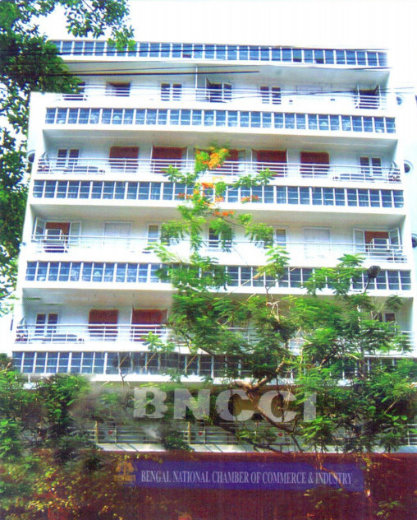
History of the Bengal National Chamber of Commerce & Industry (BNCCI)
In the late 19th century, amidst the backdrop of British colonial rule in India, a transformative movement was brewing in Bengal. The year 1887 marked the birth of the Bengal National Chamber of Commerce and Industry (BNCCI), an institution that would become a cornerstone for Indian businesses and a powerful voice for the native mercantile community. Its establishment was a bold response to the shifting dynamics of trade and commerce, which had increasingly tilted in favour of British interests, relegating Indian traders to a subordinate role. Inspired by the formation of the Indian National Congress just 14 months earlier in December 1885, the BNCCI emerged as a platform to unite and empower the diverse Indian business community, challenging the dominance of British-controlled commercial entities.
The seeds of the BNCCI were sown in response to a specific grievance: the British move to shift the export base for rice and jute from Kolkata to Chittagong port, now in Bangladesh. This decision threatened the economic vitality of Bengal’s mercantile community, prompting leading native merchants and bankers to convene an inaugural meeting on February 3, 1887. The gathering, held in Kolkata, was a testament to the unity and resolve of the city’s business leaders. The first Executive Committee reflected the Chamber’s non-communal and non-sectarian ethos, with a Marwari as President and a Muslim and a Parsee as Vice Presidents. Among the notable figures was Haji Nur Mohammed Jackariah, whose leadership and common sense were lauded by The Bengalee as a source of strength for the organization. The newspaper, founded by Girish Chandra Ghosh and edited by Surendranath Banerjee, hailed the Chamber as an “unequivocal testimony to the awakening of national life,” noting its inclusivity of traders and shroffs—groups excluded from the European Chamber of Commerce.
The BNCCI’s objectives were clear from its first meeting. It aimed to “aid and stimulate the development of the commercial enterprises in Bengal and protect commercial interests of all persons trading therein.” The founders, including prominent figures like Joy Gobinda Law, R D Mehta, and Sitanath Roy, were educated and inspired by the Young Bengal movement’s spirit of defiance and freedom of thought. Many were already members of British-controlled chambers, which gave them insight into the advantages of an indigenous organization. They pledged to promote unanimity among members, arbitrate disputes, and represent the commercial community’s views to the authorities. The Chamber’s holistic approach set it apart, emphasizing not just economic interests but also the broader aspirations of the Indian mercantile class.
Within a month of its inception, the BNCCI demonstrated its influence by securing the appointment of R D Mehta as Commissioner of the Calcutta Port, breaking what was considered an impregnable British bastion. This early success underscored the Chamber’s potential to challenge colonial dominance. Another notable achievement was its resistance to a proposed toll of 14 annas per maund of rice carried in country boats for the maintenance of the eastern canal, showcasing its commitment to protecting local traders’ interests. The Chamber’s nationalist aspirations were further evident in its memorandum submitted in March 1887, protesting a bill to amend the Calcutta Port Trust Act, a move that cemented its role as a credible voice for native merchants.
The BNCCI’s formation was celebrated by contemporary media. The Statesman, in its editorial dated February 4, 1887, noted the Chamber’s business-like approach and expressed interest in its potential to represent Bengal’s commercial interests. The Bengalee praised its inclusivity and saw it as a model for other public bodies, hoping it would foster unity between Hindu and Mohammedan interests. Despite starting with just 35 members, the Chamber grew to 51 by the end of its first year, and by the following year, it reached 54. While its initial membership was modest, its impact was profound, as it provided a platform for Indian businesses to assert their rights and aspirations.
The broader historical context shaped the BNCCI’s mission. The Indian National Congress, formed in 1885 under the leadership of Allan Octavian Hume and Omesh Chandra Banerjee, had laid the groundwork for organized resistance against British policies. Hume, a Scottish civilian, had established the Indian National Union in 1883 to foster dialogue among moderate Indian leaders, a precursor to the Congress. The BNCCI drew inspiration from this movement, recognizing the need for a similar platform in the commercial sphere. The relationship between Indian traders and British rulers, which had begun as an equal partnership, had deteriorated into a master-servant dynamic by the late 19th century. The BNCCI sought to restore agency to Indian merchants, who were frustrated by their marginalization in trade and commerce.
The first Annual General Meeting of the BNCCI, held on April 30, 1888, highlighted the founders’ concerns about the “humble position” of the Indian mercantile community. The Executive Committee’s report emphasized the untapped potential of India’s material resources and the need for unity and cooperation among native merchants to harness these for the nation’s enrichment. This vision of collective action and economic empowerment became the Chamber’s guiding principle, rooted in the Swadeshi ethos of self-reliance and national pride.
In its early years, the BNCCI forged ties with the Indian National Congress, electing four leading Congressmen as Honorary Members in its first year. By 1902, it had gained international recognition, electing James Sevestre, Secretary to the Imperial Commercial Bureau in the East, as an Honorary Member. Sevestre addressed a Special General Meeting and represented the Chamber at the Montreal Congress, signalling its growing influence on the global stage. The Chamber’s leadership, including figures like Maharaja Manindra Chandra Nandy, who became President in 1902, and his son Maharaja Sris Chandra Nandy, who was nominated to a seat in the Bengal Assembly in 1937, exemplified its commitment to advancing Indian enterprise. Somendra Chandra Nandy, Sris Chandra’s son, later served as President in 1978 and 1979, reflecting the family’s enduring legacy within the BNCCI.
Over the decades, the BNCCI evolved with India’s changing political and economic landscape. After India gained independence in 1947, the Chamber’s role shifted from resisting colonial dominance to fostering a conducive environment for business growth. It remained dedicated to promoting, representing, and safeguarding the interests of the business community, particularly in Bengal. The Chamber’s commitment to small and medium enterprises (SMEs) and micro, small, and medium enterprises (MSMEs) became a cornerstone of its mission. Recognizing that these businesses formed the majority of its membership, the BNCCI focused on transforming them into “tomorrow’s champions” by facilitating access to markets, technology, and networks.
A pivotal initiative in this regard was the Industrial India Trade Fair (IITF), launched in 1987 to commemorate the BNCCI’s centenary year. Conceived before India’s economic liberalization in 1991, the IITF demonstrated the Chamber’s foresight in embracing globalization. Held annually at venues like the Maidan, Salt Lake Stadium complex, Milan Mela Ground, Science City campus, and Park Circus Maidan, the IITF became the largest trade fair in eastern and north-eastern India. It provided a platform for BNCCI members, especially SMEs and MSMEs, to showcase innovative products and services, connect with global businesses, and explore joint ventures. The inaugural edition, inaugurated by then-Chief Minister Jyoti Basu, was a resounding success, attracting significant footfalls and setting a high benchmark.
The IITF has since been graced by Union Ministers, state leaders, diplomats, and industry leaders, including figures like Pranab Mukherjee, Buddhadeb Bhattacharjee, Somnath Chatterjee, and Sheikh Hasina. It has served as a forum for B2B meetings, technical sessions, and workshops, enabling members to identify new markets, select distributors, and discuss diversification. The Chamber’s advocacy for West Bengal as a rewarding investment destination has been a key focus, with interactions involving ministers, policymakers, and foreign delegates from countries like Bangladesh, Nepal, Bhutan, and beyond. The IITF’s thematic approach and partnerships with the West Bengal government and national MSME programs have deepened business ties and provided significant opportunities for local entrepreneurs.
Throughout its 138-year history, the BNCCI has remained a dynamic and inclusive organization, driven by its intellectual resources and willingness to embrace innovation. It has consistently worked with governments and institutions on issues ranging from policy and labour to tax and credit, advocating for a thriving business environment. The Chamber’s core principle is to act as a facilitator and change agent, enhancing the ease of starting and doing business while broadening opportunities for its members. Its commitment to “silent accomplishments” and persuasive representations, rather than confrontational approaches, has allowed it to serve as an extended arm of the government in policy formulation.
The BNCCI’s slogan, “ব্যবসায় জগতে লক্ষী” (business begets fortune and prosperity), encapsulates its mission to foster entrepreneurship and economic empowerment. Rather than supporting transient measures like doles, the Chamber believes in creating sustainable opportunities for the unemployed and underprivileged, viewing enterprises as multipliers of jobs and prosperity. Its efforts to strengthen international linkages through overseas business missions and interactions with global leaders have given its members unparalleled exposure.
Today, the BNCCI stands as a testament to the vision of its founders, who sought unity and harmony among native merchants in the face of colonial oppression. Its legacy is one of resilience, adaptability, and unwavering commitment to the interests of Bengal’s business community. From its early battles against British policies to its modern role as a catalyst for economic growth, the Bengal National Chamber of Commerce and Industry remains a powerful voice for Indian enterprise, soaked in the Swadeshi spirit that defined its founding.
Role and Impact of the BNCCI
The Bengal National Chamber of Commerce and Industry (BNCCI), established in 1887, has evolved into a pivotal institution for fostering economic growth, advocating for business interests, and empowering entrepreneurs in Bengal and beyond. With a legacy spanning over 138 years, the BNCCI has carved a niche as a dynamic facilitator for businesses, particularly Micro, Small, and Medium Enterprises (MSMEs), which form the backbone of its membership. This document outlines the Chamber’s multifaceted work, the tangible benefits it offers to its members, and its ambitious aspirations for the future, with a special focus on MSMEs and broader economic contributions.
Section 1: Core Functions of the BNCCI
1.1 Advocacy and Policy Influence
The BNCCI serves as a powerful advocate for the business community, engaging with governments at state and national levels to shape policies that foster a conducive business environment. It actively represents its members’ interests on issues such as taxation, labor regulations, trade policies, and access to credit. By participating in government and non-government committees, the Chamber ensures that the voices of MSMEs are heard in policy-making circles. For instance, it has successfully lobbied for simplified compliance procedures and tax incentives for small businesses, reducing operational burdens and enabling growth.
1.2 Facilitating Business Networking
Networking is a cornerstone of the BNCCI’s work. The Chamber organizes a range of events—seminars, workshops, roundtables, and business summits—that connect members with industry leaders, policymakers, and international delegates. These platforms enable MSMEs to forge partnerships, explore joint ventures, and access new markets. The BNCCI’s flagship event, the Industrial India Trade Fair (IITF), launched in 1987, exemplifies this role. Held annually, the IITF attracts participants from sectors like automation, robotics, healthcare, and handloom, offering MSMEs opportunities to showcase products, secure contracts, and build global networks.
1.3 Capacity Building and Skill Development
Recognizing that MSMEs often lack resources for training and innovation, the BNCCI conducts capacity-building programs tailored to their needs. These include workshops on digital transformation, financial management, and export procedures. The Chamber also partners with technical institutions to provide training in emerging technologies, such as artificial intelligence and sustainable manufacturing, empowering small businesses to stay competitive. For example, its skill development initiatives have helped MSMEs adopt e-commerce platforms, enabling them to reach wider audiences.
1.4 Dispute Resolution and Arbitration
The BNCCI acts as a neutral arbitrator, resolving commercial disputes among members or between members and external parties. This service is particularly valuable for MSMEs, which often lack the resources for prolonged legal battles. By offering mediation and arbitration, the Chamber ensures fair resolutions, fostering trust and cooperation within the business community.
1.5 Promoting Entrepreneurship
Rooted in its slogan “ব্যবসায় জগতে লক্ষী” (business begets fortune and prosperity), the BNCCI champions entrepreneurship as a means to reduce poverty and create jobs. It runs mentorship programs and startup incubators to guide aspiring entrepreneurs, particularly from underprivileged communities. These initiatives provide access to seed funding, market insights, and regulatory guidance, helping MSMEs transform into scalable enterprises.
Section 2: Benefits for BNCCI Members
2.1 Access to Markets and Opportunities
Membership in the BNCCI opens doors to domestic and international markets. Through events like the IITF, members gain visibility among high-profile buyers, distributors, and investors. MSMEs benefit from buyer-seller meets and vendor development programs, such as those conducted with the Union MSME Department, which connect them with large corporations and government agencies. For instance, a small handloom business might secure a contract with a national retailer through IITF, significantly boosting its revenue.
2.2 Policy Advocacy and Representation
Members gain a collective voice through the BNCCI’s advocacy efforts. The Chamber represents their concerns to policymakers, ensuring that MSMEs are not overlooked in favor of larger corporations. This has led to tangible outcomes, such as relaxed licensing requirements for small manufacturers and increased access to subsidized loans. Members also benefit from the Chamber’s representation on trade bodies, amplifying their influence.
2.3 Networking and Collaboration
The BNCCI’s events foster collaboration among members, enabling them to share resources, knowledge, and opportunities. MSMEs can partner with larger firms for supply chain integration or collaborate with peers to undertake joint projects. The Chamber’s international business missions, which include delegations to countries like Bangladesh, Nepal, and Bhutan, provide MSMEs with exposure to global markets, helping them secure export deals or foreign investments.
2.4 Training and Resource Support
Members receive access to tailored training programs that enhance their operational efficiency. For example, a small engineering firm might benefit from BNCCI workshops on adopting Industry 4.0 technologies, such as IoT-enabled machinery. The Chamber also provides resources like market research reports and regulatory updates, which are critical for MSMEs with limited research capabilities.
2.5 Financial and Legal Assistance
The BNCCI facilitates access to financial schemes, such as government-backed credit programs for MSMEs, and connects members with banks and financial institutions. Its arbitration services save members from costly litigation, while legal advisory support helps navigate complex regulations. These services are particularly crucial for MSMEs, which often face financial constraints and regulatory challenges.
Section 3: Focus on MSMEs
MSMEs are the lifeblood of the BNCCI, constituting the majority of its membership. The Chamber recognizes their role as job creators and economic multipliers, particularly in a resource-rich state like West Bengal. Its initiatives are designed to address the unique challenges faced by MSMEs, such as limited capital, market access, and technological adoption.
3.1 Tailored Support for MSMEs
The BNCCI’s programs focus on transforming MSMEs into “tomorrow’s champions.” Through the IITF, MSMEs gain a platform to showcase niche products, from handcrafted textiles to innovative engineering solutions. The Chamber’s partnerships with government bodies ensure that MSMEs benefit from schemes like the Credit Guarantee Fund Trust for Micro and Small Enterprises (CGTMSE), which provides collateral-free loans.
3.2 Technology and Innovation
To keep MSMEs competitive, the BNCCI promotes the adoption of cutting-edge technologies. It organizes technical sessions on automation, robotics, and digital marketing, enabling small businesses to modernize their operations. For example, a small-scale manufacturer might learn to implement cloud-based inventory management, reducing costs and improving efficiency.
3.3 Global Exposure
The BNCCI’s international outreach ensures that MSMEs are not confined to local markets. By facilitating participation in global trade fairs and organizing interactions with foreign delegates, the Chamber helps MSMEs explore export opportunities. A notable success story is the increased export of Bengal’s handloom products to Southeast Asian markets, driven by BNCCI’s trade missions.
3.4 Empowering Women and Marginalized Entrepreneurs
The BNCCI places a special emphasis on supporting women-led MSMEs and businesses from marginalized communities. Its entrepreneurship programs provide targeted mentorship and funding access, helping these businesses overcome systemic barriers. For instance, self-help groups (SHGs) involved in handicrafts have scaled up through BNCCI’s support, gaining access to e-commerce platforms and international buyers.
Section 4: Future Aspirations
The BNCCI’s vision for the future is rooted in its commitment to fostering a thriving, inclusive, and sustainable business ecosystem. Its aspirations reflect a deep understanding of emerging economic trends and the needs of its members, particularly MSMEs.
4.1 Digital Transformation and Industry 4.0
The BNCCI aims to lead the digital transformation of Bengal’s business landscape. It plans to establish a dedicated Digital Innovation Hub to provide MSMEs with access to AI, IoT, and blockchain technologies. This hub will offer training, subsidized software solutions, and partnerships with tech firms, ensuring that small businesses remain competitive in a digital economy.
4.2 Sustainable Business Practices
With sustainability becoming a global priority, the BNCCI aspires to promote eco-friendly practices among its members. It plans to launch a Green Business Initiative, offering MSMEs guidance on adopting renewable energy, reducing waste, and achieving carbon neutrality. This will not only enhance their market appeal but also align with global sustainability goals.
4.3 Strengthening Global Linkages
The Chamber aims to deepen its international presence by forging trade agreements with emerging markets in Africa, Southeast Asia, and Latin America. It plans to organize more overseas business missions and establish sister-chamber partnerships to provide MSMEs with direct access to global supply chains. The goal is to position West Bengal as a hub for international trade and investment.
4.4 Inclusive Growth and Social Impact
The BNCCI envisions a future where entrepreneurship drives inclusive growth. It plans to expand its startup incubators to support at least 1,000 new MSMEs over the next decade, with a focus on rural and women-led enterprises. By partnering with educational institutions, the Chamber will also offer entrepreneurship courses to equip young graduates with the skills to launch their own ventures.
4.5 Policy Advocacy for MSMEs
The BNCCI aims to advocate for a dedicated MSME Policy Framework at the state and national levels, focusing on tax breaks, simplified compliance, and increased funding for innovation. It plans to collaborate with think tanks and policy analysts to develop data-driven recommendations, ensuring that MSMEs are at the forefront of India’s economic growth.
Section 5: Broader Contributions to Society
Beyond its role as a business facilitator, the BNCCI contributes to societal development. It believes that enterprises are not just profit-making entities but also agents of social change. The Chamber’s initiatives, such as job fairs and skill development programs, address unemployment and empower marginalized communities. Its advocacy for infrastructure development, such as improved logistics and connectivity in West Bengal, benefits both businesses and the public.
The BNCCI also engages in corporate social responsibility (CSR) activities, supporting education, healthcare, and environmental conservation. For example, it has partnered with NGOs to provide vocational training to rural youth, enabling them to join MSMEs or start their own businesses. These efforts align with the Chamber’s belief that sustainable business growth must uplift society as a whole.
Conclusion
The Bengal National Chamber of Commerce and Industry stands as a beacon of entrepreneurial spirit and economic resilience. Through its advocacy, networking, and capacity-building efforts, it empowers MSMEs to thrive in a competitive landscape. Members benefit from unparalleled access to markets, resources, and policy influence, while the Chamber’s future aspirations promise to position Bengal as a global business hub. By fostering innovation, sustainability, and inclusivity, the BNCCI continues to live up to its founding principle of “business begets fortune and prosperity,” driving economic and social progress for generations to come.
BNCCI Grand Annual Conclave
BNCCI: A Heritage of Commerce and Industry- A Summary
- The Bengal National Chamber of Commerce & Industry (BNCCI) is among India’s oldest indigenous business associations, founded on 2 February 1887 to promote trade, commerce, and industry led by Indian entrepreneurs during British rule.
- Original leadership included eminent Bengali zamindars and entrepreneurs; its first president was Rai Buddree Das Mukkim Bahadur, followed by notable figures such as Raja Sew Bux Bagla, Maharaja Manindra Chandra Nandy, Nalini Ranjan Sarkar, and Amritlal Ojha.
- Over more than a century, BNCCI has steadfastly served the business community of eastern India and beyond—offering services like business information, consultancy, member directories, and issuing Certificates of Origin.
- In 2019, on celebrating 132 years, its leadership emphasized BNCCI’s historical importance and its enduring role in supporting MSMEs and entrepreneurial development.
Industrial India Trade Fair: BNCCI’s Flagship Showcase
- Since around 1987, BNCCI has organized the Industrial India Trade Fair (IITF) in Kolkata—one of the major trade and business fairs in eastern India—anticipating India’s economic liberalization and globalization of the 1990s.
- The 33rd edition was held from 17–21 February 2021 in New Town, Rajarhat. The fair featured government participation, conclaves on industry, skills, education, and cultural programmes alongside business exhibitions.
- The Chamber also hosted an Education Conclave in collaboration with Techno India Group at the 33rd IITF, themed “Education for the New Millennium”—highlighting its broader role in societal development.
- The 35th edition received coverage from major media (like Aajkaal) during its valedictory session, reflecting its ongoing significance
- The 36th edition of the Industrial India Trade Fair, held for the first time at Eco Park, Kolkata, marked a significant milestone with the participation of national and international brands, key government departments, and leading industry heads — all under the able leadership of Shri Ashoke Kumar Banik, the present President of BNCCI.
India International Trade Fair (IITF): A National Counterpart.
- The nationally renowned India International Trade Fair (IITF) started in 1980 at Pragati Maidan, New Delhi. Organized annually by the India Trade Promotion Organisation (ITPO), it runs for nearly two weeks in mid-November.
- IITF is India’s premier trade event—bringing together a broad spectrum of industries—from textiles and electronics to pharmaceuticals and engineering—with exhibitor and visitor numbers in the millions.
- The ITPO itself was formed in 1992, merging earlier trade promotion bodies to create a comprehensive, government-backed trade promotion agency.
Building on Legacy: The Bengal Festival Fair 2025
- The Bengal Festival Fair 2025, led by BNCCI, draws a direct lineage from its Chamber-led trade fair history—rooted in an unbroken tradition of fostering industry, commerce, cultural engagement, and community at Khudiram Anushilan Kendra from 9th September to 14th September.
- Much like the Industrial India Trade Fair, the Bengal Festival Fair is positioned to offer a vibrant platform—blending trade opportunities, cultural display, pre-puja lifestyle shopping, and strategic networking.
- It carries forward the Chamber’s forward-thinking spirit, shifting with the times yet anchored in tradition—just as the national IITF and Chamber’s own roots demonstrate.